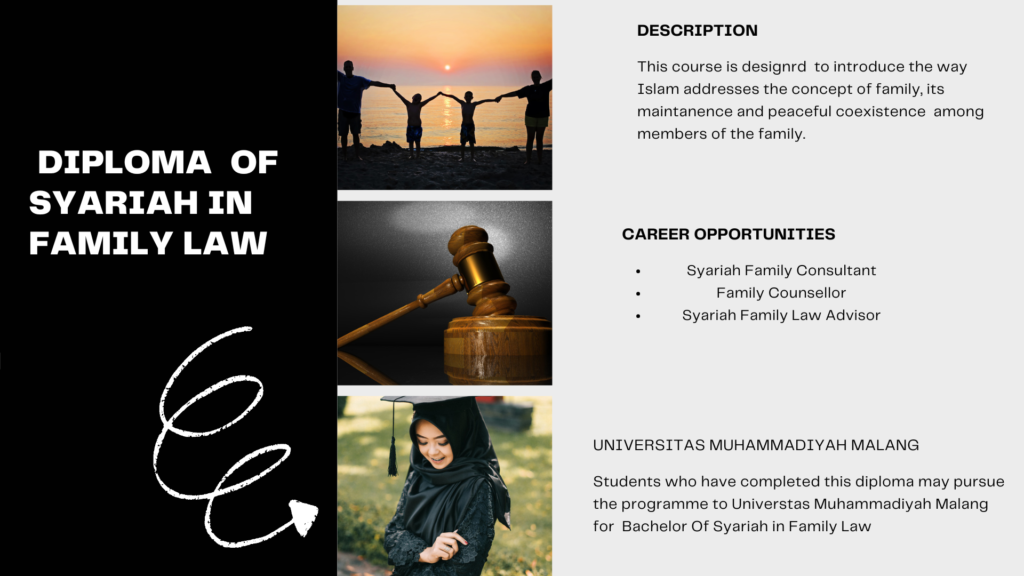
Diploma in Syariah Family Law
Navigating Family Justice, Marital Jurisprudence, and Domestic Mediation with Integrity
Gain a comprehensive understanding of Islamic family jurisprudence (Fiqh al-Usrah), statutory Syariah legal frameworks, and practical dispute resolution skills to support families, advise clients, and serve the legal community.
Programme Overview
The Diploma in Syariah Family Law provides an in-depth study of Islamic personal status law, legal administration, and practical court processes. The curriculum balances classical Islamic jurisprudence (Turath) with contemporary statutory family law, court procedures, and alternative dispute resolution (mediation).
Participants explore the full spectrum of family law dynamics—from pre-marital requirements and marital contracts to divorce proceedings (Talaq, Khul’, Fasakh), custody (Hadanah), maintenance (Nafqah), and estate distribution (Faraid).
What You Will Learn
- Islamic Family Jurisprudence (Fiqh al-Usrah): Principles governing marriage contracts, marital rights, duties, and dissolution methods.
- Statutory Syariah Law & Administration: Court jurisdiction, statutory family enactments, and procedural rules in Syariah courts.
- Divorce & Ancillary Matters: Grounds for matrimonial relief, Iddah, Muta’ah, joint property division (Harta Sepencarian), and maintenance.
- Child Custody & Guardianship (Hadanah & Wilayah): Legal frameworks protecting the best interests and welfare of the child.
- Islamic Estate & Inheritance (Faraid & Wasiat): Calculating estate shares, drafting wills (Wasiat), and managing gifts (Hibah).
- Family Mediation & Dispute Resolution: Practical negotiation, counseling integration, and peaceful conflict resolution (Sulh).
Course Modules & Material Outline
| Module Code | Module Title | Key Topics Covered |
| DSFL 101 | Foundations of Fiqh al-Usrah | Classical Islamic rulings on marriage, capacity, proposal (Khitbah), and guardianship (Wali). |
| DSFL 102 | The Islamic Marriage Contract (Nikah) | Essential elements (Rukn), legal conditions (Shart), dowry (Mahr), and marital stipulations. |
| DSFL 103 | Dissolution of Marriage (Talaq, Fasakh, Khul’) | Types of divorce, revocation (Rujuk), legal grounds for annulment, and judicial divorce. |
| DSFL 104 | Financial Obligations (Nafqah & Muta’ah) | Spousal and child support calculations, arrears, and consolatory gifts (Muta’ah). |
| DSFL 105 | Custody & Guardianship (Hadanah) | Custodial eligibility, welfare tests, visitation rights, and guardianship duties (Wilayah). |
| DSFL 106 | Islamic Wealth Planning & Faraid | Inheritance rules, estate settlement, gifts (Hibah), and revocable/irrevocable trusts. |
| DSFL 107 | Syariah Court Procedure & Mediation (Sulh) | Pleadings, evidence (Bayyinat), court procedures, and pre-trial mediation skills. |
Who Should Attend?
- Legal Practitioners & Executives: Lawyers, paralegals, and legal assistants handling family law or estate matters.
- Religious Officers & Community Leaders: Imams, Asatizah, and mosque officials advising community members on domestic issues.
- Social Workers & Family Counselors: Practitioners supporting families through separation, custody, or domestic disputes.
- Marriage Guidance Personnel: Educators and counselors involved in pre-marital or marriage enrichment programmes.
Programme Structure & Details
- Duration: 12 Months (Part-Time / Modular Format)
- Format: Interactive lectures, legal case study analyses, mock court trials, and mediation simulations
- Assessment: Written assignments, case law briefs, practical court simulations, and a final written exam
- Certification: Awarded the Diploma in Syariah Family Law upon successful completion
Master the Principles of Islamic Family Justice
Equip yourself with the legal knowledge and ethical tools to guide families with fairness and compassion.